Jonas Schmitt · 5 October 2026
Gold Leaf's Quiet Role in Modern Culinary Plating Techniques Across Asian Kitchens
Gold leaf appears in Asian culinary plating as thin sheets or flakes that chefs apply to desserts, sushi, and savory presentations, and this practice draws from centuries-old traditions while adapting to current fine dining demands across Japan, Thailand, India, and parts of Southeast Asia. Data from regional food industry reports show steady incorporation in high-end establishments where visual contrast and perceived value matter, yet the material itself remains neutral in flavor and contributes only through appearance and texture.
Traditional Foundations in Asian Cuisine
Historical records indicate that edible gold entered Asian food practices through trade routes and royal kitchens, where artisans hammered pure gold into sheets thin enough for consumption without altering taste. In Japanese kaiseki and Thai royal cuisine, gold leaf marked special occasions and distinguished dishes served to nobility, while Indian confectioners used it on sweets like barfi to signify prosperity during festivals. Observers note that these applications stayed consistent because gold passes through the digestive system unchanged, which aligns with food safety evaluations from agencies such as Health Canada and the Singapore Food Agency that classify edible gold as non-reactive.
Current Plating Methods and Regional Adaptations
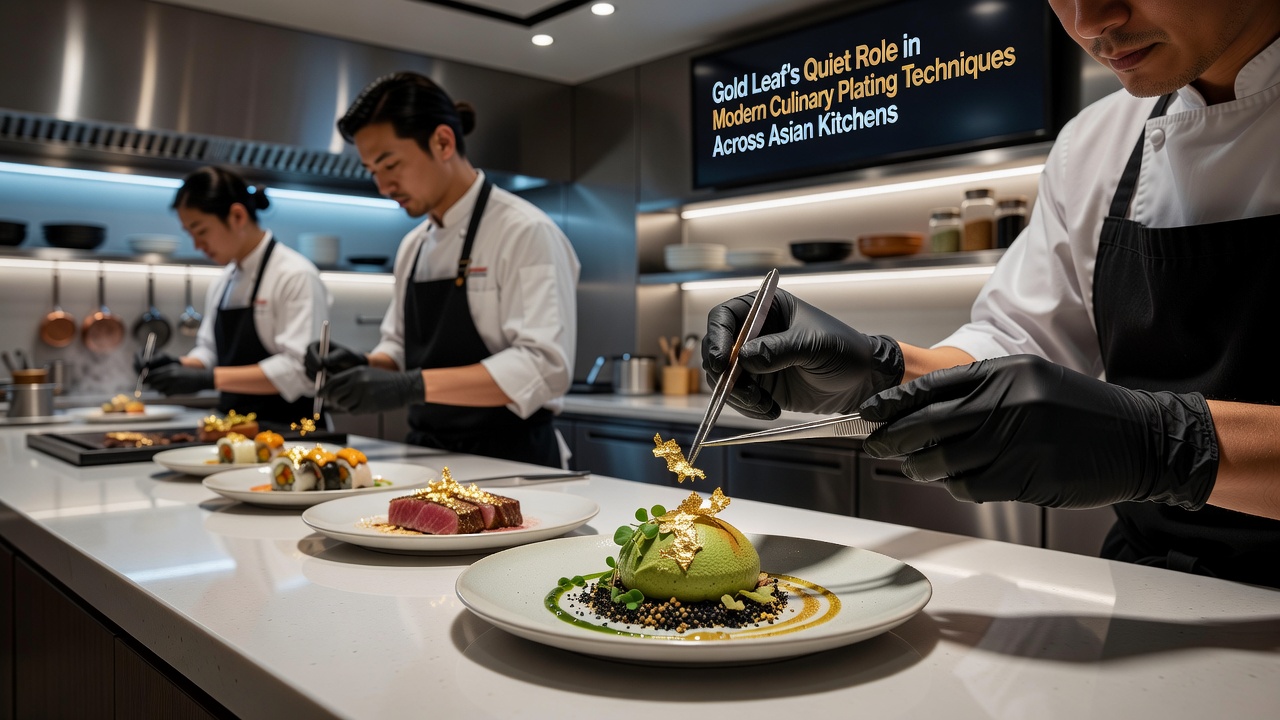
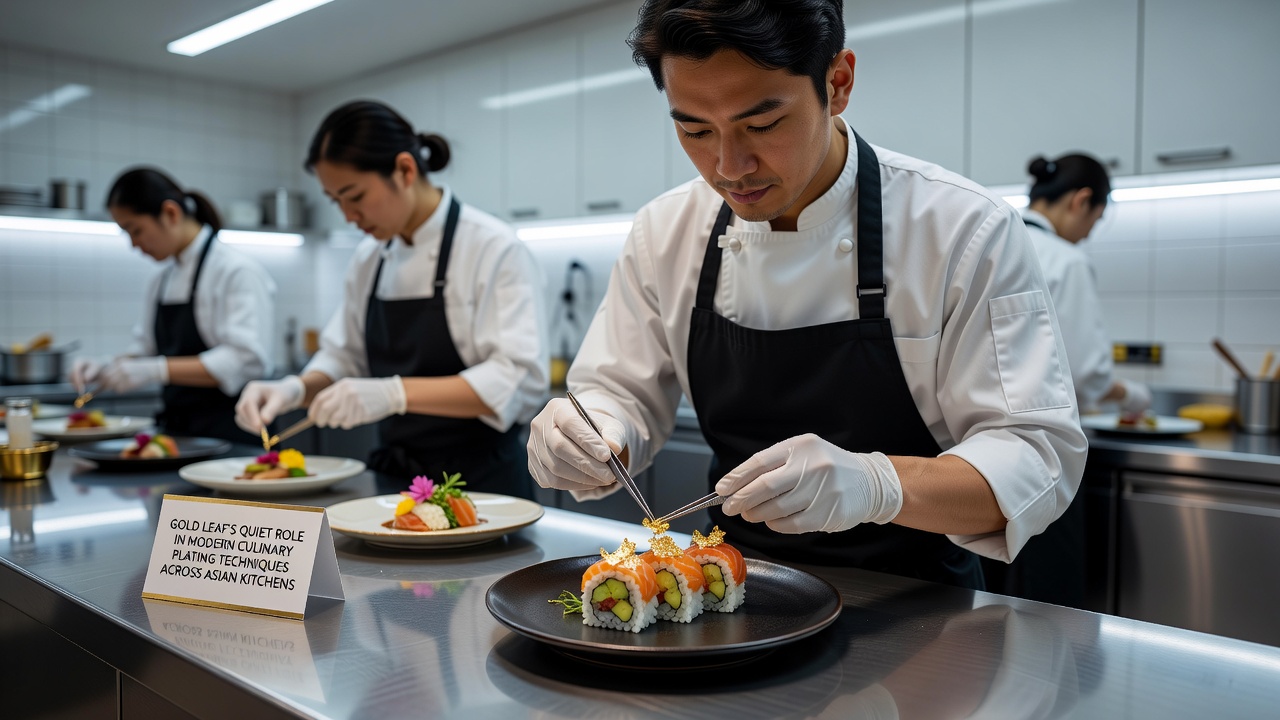
Modern chefs transfer gold leaf using specialized brushes, tweezers, or static-charged tools to avoid tearing the fragile material, and they often combine it with edible flowers, microgreens, or colored sauces for layered visual effects. In Tokyo restaurants, a single sheet might accent a matcha dessert or rest atop nigiri, whereas Bangkok kitchens apply flakes to mango sticky rice or tom yum presentations to catch light under dining room illumination. Indian pastry teams working in five-star hotels press gold onto plated gulab jamun or fusion items that merge local spices with European techniques, and these choices reflect both heritage and guest expectations documented in hospitality surveys.
Training programs at culinary institutes in Seoul and Singapore now include modules on gold leaf handling, emphasizing portion control since one book of 25 sheets typically covers multiple services when applied sparingly. Equipment suppliers report increased orders for humidity-controlled storage cases that prevent sheets from sticking, a practical adjustment given the variable climates across the region.
Sourcing, Purity Standards, and Supply Chain Details
Most gold leaf used in Asian kitchens originates from suppliers in Thailand, Japan, and India who produce sheets meeting 22-24 karat purity thresholds required for food contact. Figures from trade associations reveal that production volumes have grown alongside tourism recovery, with workshops adjusting output to meet orders from both domestic hotels and export markets. Chefs verify certification labels that confirm absence of heavy metals or fillers, a step supported by testing protocols from the Korea Food and Drug Administration.
Storage and handling follow strict guidelines because moisture causes clumping, and kitchens maintain dedicated stations away from high-traffic areas to reduce contamination risk. One study conducted by researchers at a leading Thai university tracked application consistency across 50 restaurants and found that standardized tools improved yield by measurable margins without increasing costs significantly.
Regulatory Updates and Industry Practices in 2026
Guidelines updated in October 2026 by several Asian food authorities clarified labeling requirements for dishes containing edible gold, mandating disclosure on menus when the ingredient exceeds trace amounts. These changes align with broader international standards and encourage suppliers to provide batch documentation that kitchens retain for inspection purposes. Restaurants in major cities have incorporated these rules into staff training, ensuring compliance while maintaining the understated aesthetic that gold leaf provides.
Industry events scheduled for late 2026 focus on sustainable sourcing practices, including traceability systems that document the journey from refinery to plate, and these initiatives address both environmental concerns and consumer interest in ingredient origins.
Conclusion
Gold leaf continues to serve a functional yet understated purpose in Asian plating techniques, supported by established traditions, refined application methods, and evolving regulatory frameworks that keep the practice accessible to professional kitchens. Data from hospitality reports and regulatory bodies indicate ongoing use without dramatic shifts, as chefs integrate the material selectively to enhance presentation while meeting safety and documentation standards. The result remains a consistent element within broader trends toward visually distinctive dining experiences across the region.