Willa Weber · 19 October 2026
Thai Metalworkers Blend Traditional Gold Leaf Techniques with Electric Guitar Custom Finishes
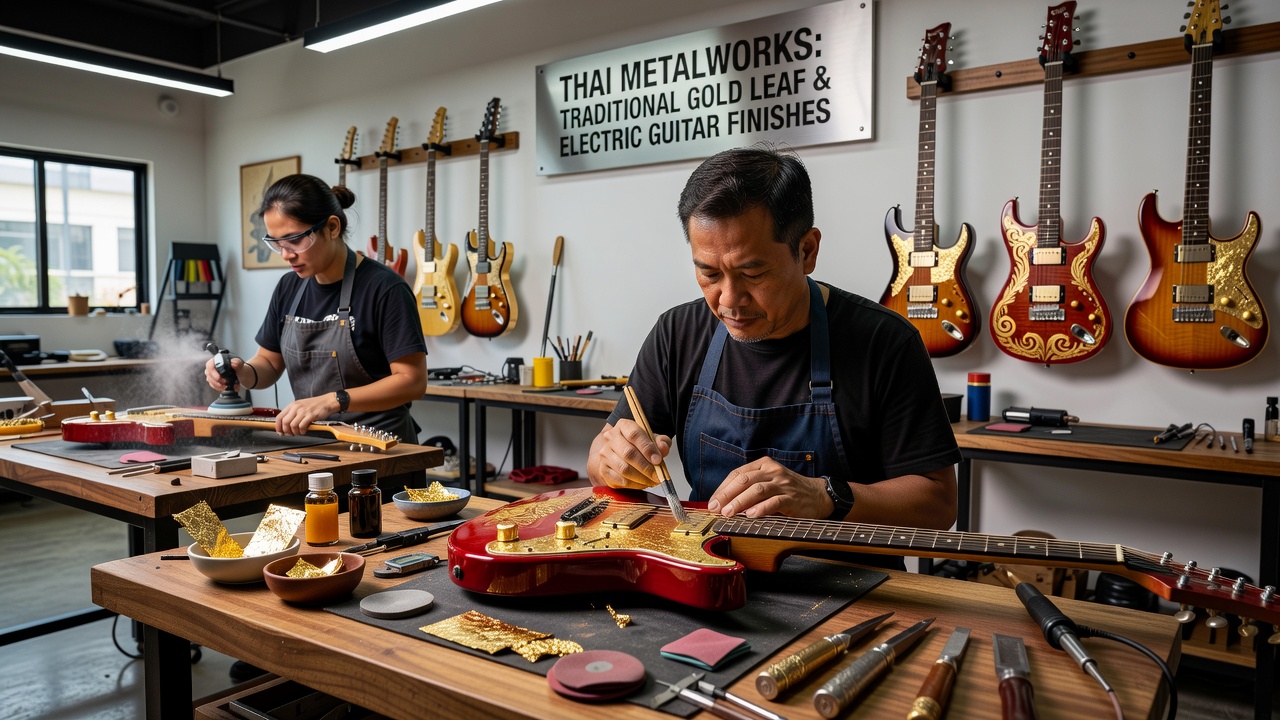
Thai metalworkers have integrated centuries-old gold leaf production methods with contemporary electric guitar customization processes, creating instruments that carry detailed gold surfaces applied through traditional beating and adhesion techniques. Workshops in Bangkok and surrounding regions handle both the hammering of gold ingots into ultra-thin sheets and the subsequent application onto guitar bodies, necks, and hardware components, where the material must withstand repeated handling and environmental changes during live performances.
Gold leaf production in Thailand follows steps that date back several hundred years, beginning with the melting of refined gold, pouring into molds, and repeated hammering between layers of parchment or leather until sheets reach thicknesses measured in micrometers. These sheets then move to guitar finishing stations where workers clean the wood or metal surfaces, apply adhesive sizing, and lay the gold in place before burnishing to remove wrinkles and achieve a uniform appearance. The process requires controlled humidity levels because excess moisture can cause the delicate sheets to tear during placement.
Techniques in Guitar Finishing
Electric guitar manufacturers and independent luthiers commission these finishes for both domestic and export markets, with applications ranging from full-body gold coverage to selective inlays around pickup rings, control knobs, and headstock logos. Workers use the same gold leaf stock employed in temple restoration projects, though they adjust the number of layers and protective topcoats to meet the mechanical demands of string tension and stage lighting heat. Some workshops combine multiple gold karat weights within a single instrument to produce subtle color variations that appear under different lighting conditions.
Data from Thailand's Department of Industrial Promotion shows increased orders from overseas guitar builders between 2023 and 2025, with the majority of shipments directed toward North American and European custom shops. The same reports note that artisans maintain separate production lines for cultural artifacts and musical instruments to avoid cross-contamination of materials or techniques. In October 2026, several Bangkok workshops plan to demonstrate these combined methods at a trade exhibition organized in partnership with regional music equipment distributors.
Material Sourcing and Workshop Operations
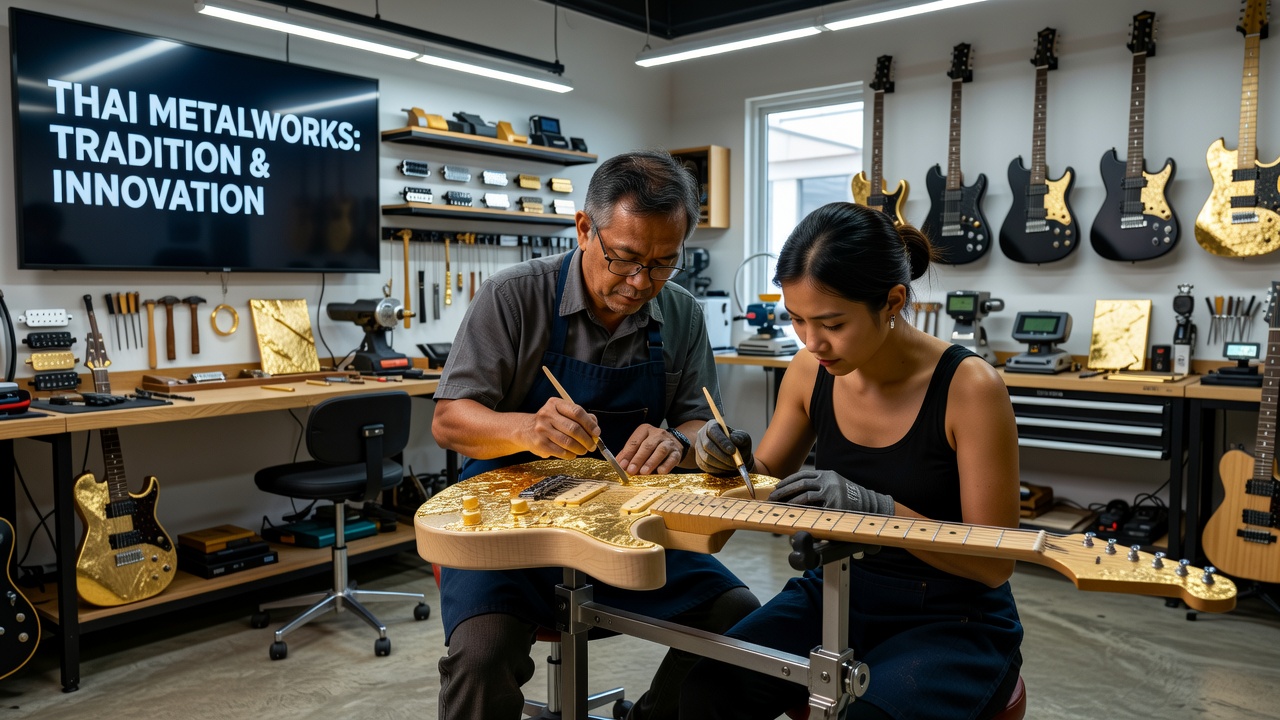
Gold suppliers deliver refined ingots to metalworking facilities where teams divide their time between traditional temple commissions and the newer guitar projects. Equipment includes wooden anvils, specialized hammers, and humidity-controlled drying rooms that serve both product categories. Guitar-specific adaptations include the addition of epoxy undercoats and UV-cured clear coats that protect the gold layer from sweat, oils, and abrasion while preserving the reflective quality that many players seek.
Observers note that the same artisans who produce gold leaf for architectural gilding often train newer workers on guitar applications, passing along precise hand movements required to handle sheets that measure less than 0.1 micrometers thick. Training programs run by local craft associations document these methods in written manuals that list temperature ranges, adhesive drying times, and recommended burnishing pressures for different guitar woods such as alder, ash, and mahogany.
Market Reach and Industry Data
Export records compiled by the Thai Ministry of Commerce indicate that gold-leaf-finished guitars now appear in catalogs from several mid-sized instrument brands, with custom orders representing the largest segment. A study conducted by researchers at the University of British Columbia examined adhesion performance of gold leaf on various guitar finishes and reported that properly sealed applications retained integrity after simulated touring conditions that included temperature cycling and vibration testing. Those findings have circulated among Thai workshops through industry translation services.
Additional collaboration occurs with hardware manufacturers who supply gold-plated tuning machines and bridge assemblies that match the leaf-applied body surfaces. Workshops coordinate these elements so that the final instrument presents a consistent metallic appearance across wood and metal parts without requiring electroplating processes that would differ from traditional leaf application.
Conclusion
The combination of established gold leaf practices with electric guitar finishing continues to expand as Thai workshops receive steady commissions from international clients. Production remains centered in facilities that already manage high-volume temple restoration work, allowing the same skilled workforce to apply proven methods to a growing category of musical instruments. Trade data and technical reports confirm ongoing activity, with scheduled demonstrations planned for October 2026 to showcase the techniques to a wider audience of builders and distributors.